The portfolio that got me hired (and no longer works)
In 2010, I built a Flash portfolio called chrisjockey V2.
-
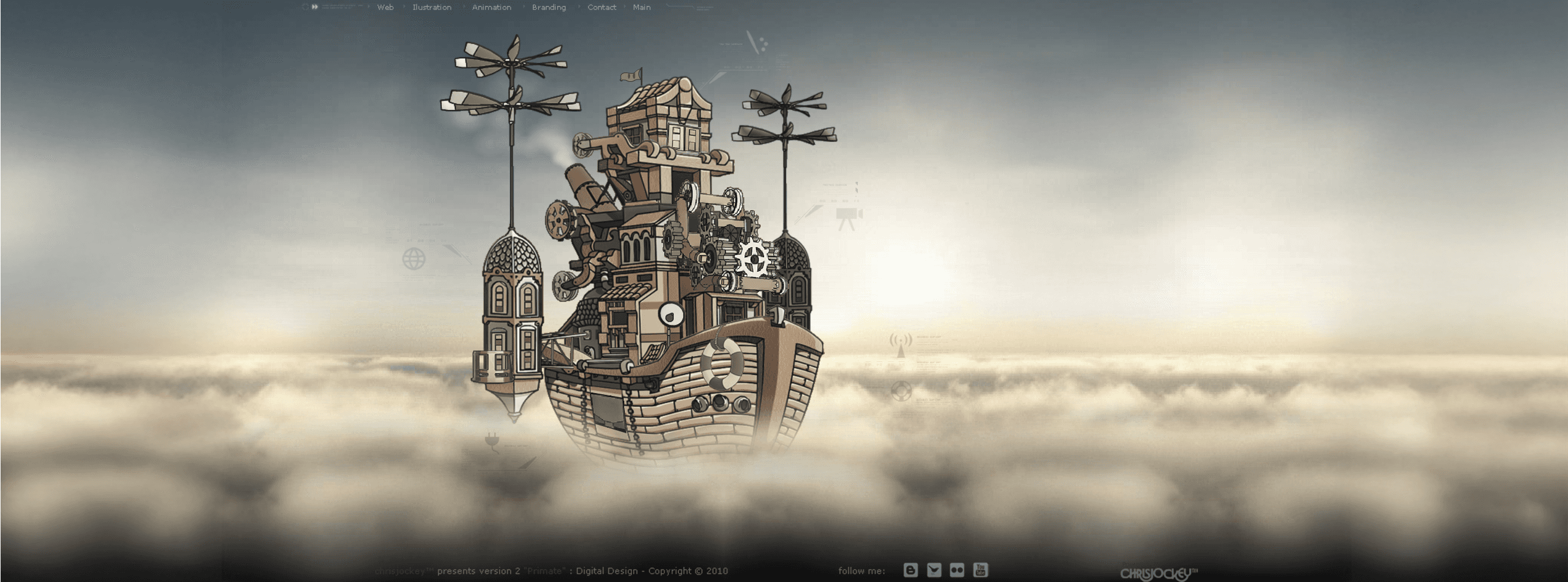
It was a steampunk airship floating above the clouds, and everything on it moved, that last part mattered more than anything else at the time. In 2010, Flash was still the closest thing the web had to a cinema. Browsers couldn't do what Flash did. If you wanted animation, physics, sound, and interactivity all running together in a single page, Flash was the only real option. And designers who could push it to its limits were taken seriously.
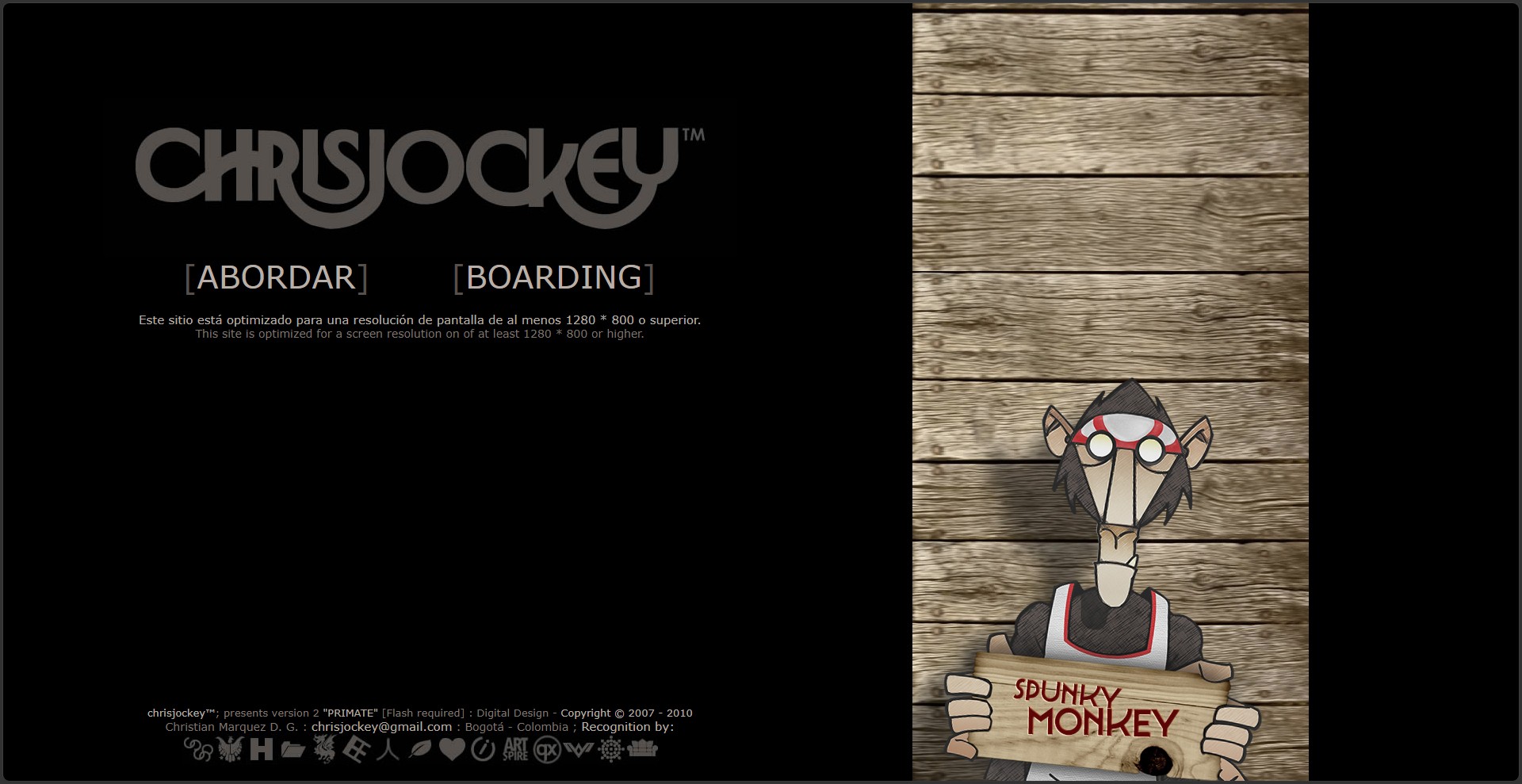
The entry page: choose your language, then board the ship.
Before you even reached the airship, there was a gate. A simple HTML page with a wooden panel texture, a monkey holding a sign, and two options: board in Spanish or board in English. It was a small detail. But it set the tone immediately. You were not visiting a portfolio. You were entering something.
Once inside, the ship took over. The background scrolled in parallax layers. Birds flew in the distance. A monkey character hid inside the machinery and only appeared when you hovered over certain spots. The smoke from the chimney ran on a custom particle script.
The engine and some of the mechanical doors were built in Swift 3D to give them realistic weight and motion. I matched textures in Photoshop across every element until the whole thing felt like it came from the same world, the same light source, the same wear and age.
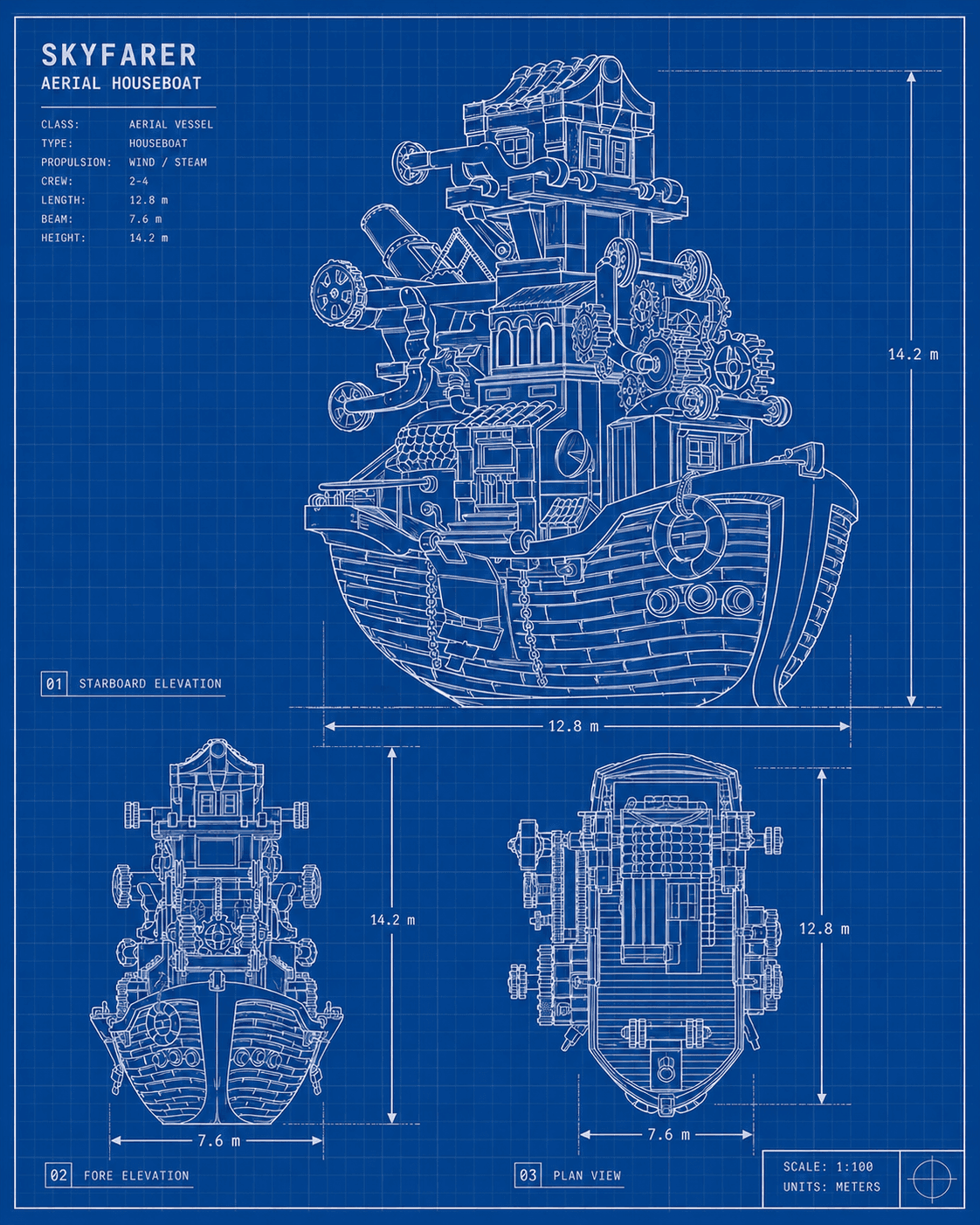
The Skyfarer: every structural element illustrated from scratch, piece by piece.
The ship had a name: the Skyfarer. An aerial vessel, wind and steam powered, crew of two to four. I gave it fictional dimensions and a full technical identity because that level of internal logic is what makes an illustrated world feel real rather than decorative.
The references were anime, video games, and music. The visual style was HUD: schematics, barcodes, crosshairs, and signal icons used as decorative overlays around the content. A common aesthetic in design circles at the time, borrowed from sci-fi interfaces and military displays, and it gave the whole thing a sense of being a live system rather than a static page.
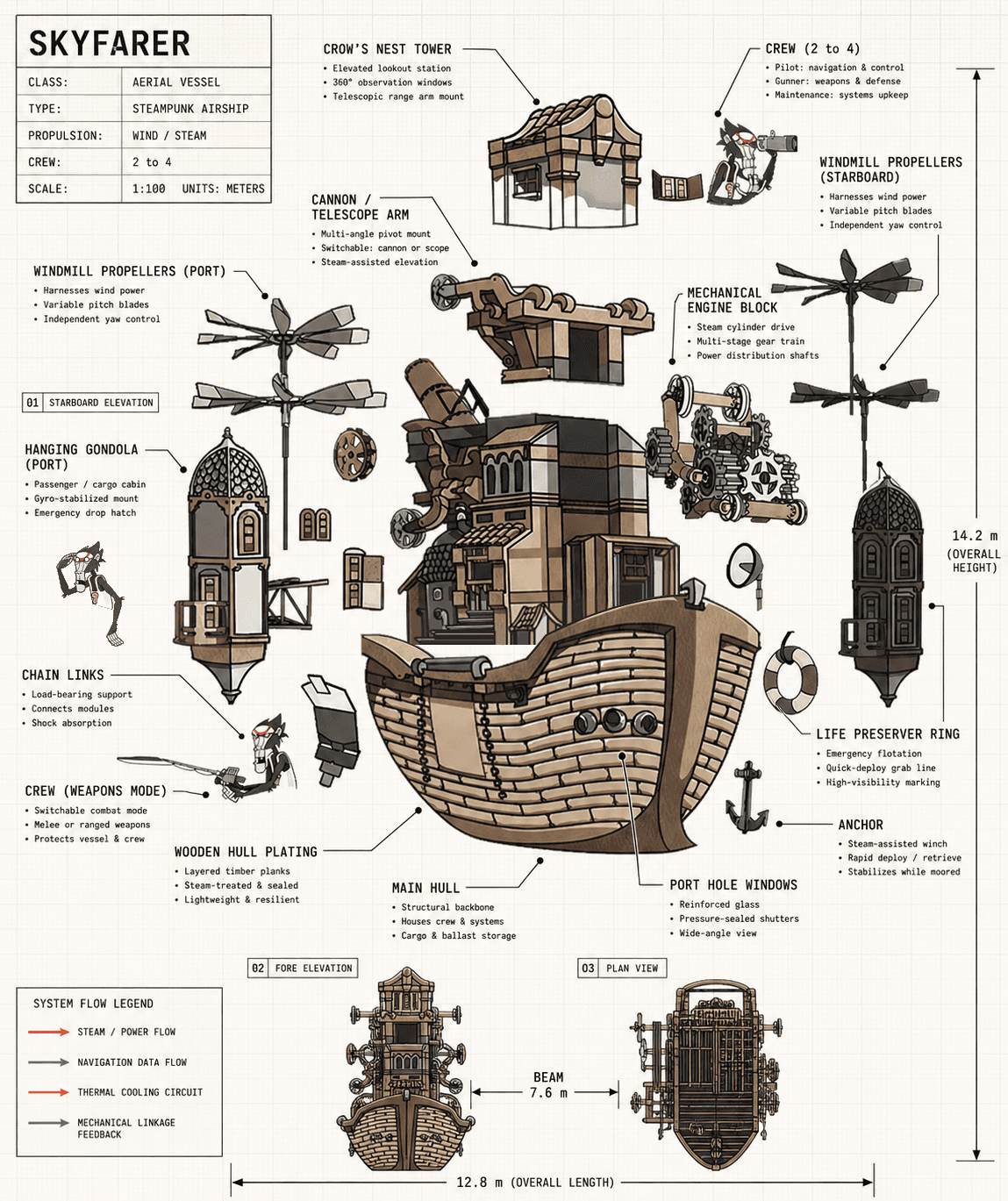
Every component built as a separate element, the only way to make all of it move independently.
Everything you see in the ship I drew and illustrated from scratch, piece by piece, the way you build sprites for a 2D video game. Nothing was stock. Nothing was downloaded. The crow's nest, the hanging gondolas, the mechanical engine block, the windmill propellers, the chain links, the anchor, the porthole windows. Each one was a separate illustrated element.
That separation was not just an aesthetic choice. It was a technical requirement. For any part of the ship to animate on its own, it had to exist as its own isolated object. The structure of the illustration was the structure of the code time.
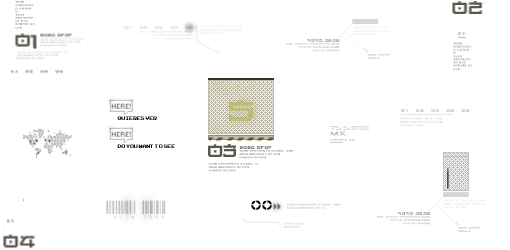
The HUD layer, schematics, coordinates, and signal markers borrowed from sci-fi interfaces, scattered across every section.
The HUD layer ran through the entire interface. Numbered panels, coordinate grids, signal markers, and schematic overlays appeared in different sections, giving each page the feeling of a live operational system rather than a static gallery. It was decorative, yes. But it was also consistent. Every section spoke the same visual language, which is what made the whole thing feel designed rather than assembled.

ITC Lubalin for headlines, Verdana for body, and a palette built entirely from bronze and warm neutrals.
It got featured on 15 design websites. Most of them don't exist anymore, which feels appropriate for a project built on a dead technology. But at the time, being listed on those sites meant something real. Design galleries were how work traveled before social media made everything faster and shallower. Getting picked up meant other designers had looked at your work carefully enough to write about it.
More importantly, it got me a job at McCann Erickson in Bogotá, a global advertising network. That was the goal the whole time.
This is how the website worked back in the day.
Then Steve Jobs announced that Apple would not support Flash on iOS. The announcement came in 2010, the same year I launched the portfolio. The writing was on the wall almost immediately. Flash had serious security problems, it drained battery, and it simply didn't work on the device that was quickly becoming how most people accessed the web.
I knew ActionScript 2 well enough to build complex interactions, but I never made the full jump to JavaScript. It was hard, and I didn't push through it the way I should have. Instead I moved to HTML, CSS, and CSS3, the tools that slowly filled the gap Flash left behind.
I lost a skill set I had spent years building. That stings a little even now.
But I also learned something that still shapes how I work: a portfolio is not just a collection of work. It is an argument. Every animation, every hidden detail, every texture decision, every illustrated element was making a case for how I think and what I am willing to put into something.
That argument was specific enough, and honest enough, to land me my first agency job. The technology is gone. The argument still holds.
Thanks for reading!